
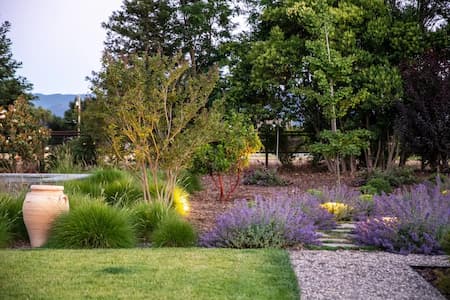
The Seven Principles of Drought-Tolerant Landscaping
Drought-tolerant landscaping, or xeriscaping, is a landscaping practice that's rapidly growing in popularity all over, particularly here in the western half of the US. The "traditional" yard of American Suburbia, with its expansive lawns of water-hungry green turf grass, was not designed with the Central California climate in mind. Landscaping like that demands high water consumption and additional maintenance, but even with the most diligent landscape maintenance, one tough drought can take its toll and leave a once-verdant yard dry and dead. Rather than fighting against our arid Mediterranean climate, drought-tolerant landscaping works with it instead.
That's all well and good, but what actually defines drought-tolerant landscaping? When you first start reading up on it, you might think that xeriscaping is all about ripping up your old lawn and planting cacti instead. In fact, the practice of xeriscaping is much more nuanced, though still very easy to understand. Xeriscaping is based on seven principles that anyone can put into practice.
1. Strategic, Water-Wise Planning and Design
Like any good landscape, a drought-tolerant landscape should be built around a cohesive design plan, with a particular emphasis on conserving water. The property owner (or landscaping company) planning such a design will need to account for factors such as:
- Soil type
- Sun exposure
- Drainage
- Where the wet and dry areas of their landscape lie
- How to group together plants with similar water consumption needs
- Where to fit potential hardscaping
Just like a house, a drought-tolerant landscaping project will fail without a strong foundation. Once you have a well-thought-out and cohesive plan put together, you can put it into action.
2. Soil Improvement
The next step of xeriscaping involves reworking and amending the soil with organic matter to encourage healthy drainage and improve water retention. Be careful how you do this, though. A lot of people new to xeriscaping go overboard when amending their soil to make it as rich and moist as possible, when in fact drought-friendly plants often prefer soil that's drier and well-draining. Figure out what type of soil your plants will need (this is where you can reference your design), and work on optimizing your soil to suit them.
3. Efficient Irrigation Systems
Even drought-tolerant landscapes need some water, but efficient delivery of that water will help you cut way down on waste. Most people unintentionally overconsume water when watering their landscapes by hand, which is why installing high-quality and efficient irrigation systems-including sprinklers, drip irrigation lines, and soaker hoses-is ideal.
4. Selecting Drought-Tolerant Plants
It goes without saying, but drought-tolerant landscaping requires drought-tolerant plants. Some people have the idea that drought-tolerant plants lack color and visual appeal, when in fact nothing could be further from the truth. There is an abundance of vibrant and colorful flowers, grasses, cacti, trees, shrubs, succulents, and more that all thrive in Central California's Mediterranean climate, many of which are native species as well. This guide from Moon Valley Nurseries is a great introduction to some of the best plants for drought-tolerant landscaping in California.
5. Utilizing Mulch
Mulch is a landscaper's best friend. It improves moisture retention and reduces water evaporation, insulates plant roots from extreme heat and cold, discourages weed growth, helps control erosion, and adds another decorative element to your landscape beds. Mulch can either be organic (like shredded wood or bark chips) or inorganic (gravel, stone, lava rock, etc). Different types of plants prefer different types of soil, so do your research to make sure you're giving your plants what they need. Also, be careful not to pile your mulch up around plant stems, as this can encourage disease and decay.
6. Limiting Turfgrass Areas
As we addressed before, turfgrass lawns are major water guzzlers and the antithesis of drought-tolerant landscaping. If possible, eliminating turfgrass is ideal, replacing it instead with groundcover alternatives like native grasses and flowers, landscape rock, or decorative mulch. If you still want to incorporate some turf in your landscape design, use it strategically and in limited amounts, and opt for more drought-tolerant varieties like fescue and buffalo grass.
7. Stay On Top Of Landscape Maintenance
No landscape is 100% maintenance-free, and xeriscapes are no exception. The good news is that xeriscapes often need maintenance far less frequently than more traditional landscapes. Instead of mowing and trimming a lawn once a week, you'll only have to worry about staying on top of seasonal adjustments. Monitor your plants' health through the year, take care of things like weeding, pruning, yard cleaning, and aeration as needed, and check your irrigation systems now and then for any potential leaks or water waste.
How AAA Landscaping Can Help
As a homegrown San Luis Obispo landscaping company founded by area locals, we here at AAA Landscaping are very familiar with our local climate and what it takes to maintain healthy landscaping in such a climate. We specialize in planning, designing, and installing drought-tolerant landscapes that don't need to consume lots of water to look amazing all year round. We're passionate about helping our customers find landscaping solutions that save them money and help the environment while boosting their property's aesthetics. If you're ready to embark on your drought-tolerant landscaping journey, we're here to help.
Plan your new San Luis Obispo landscapes today with AAA Landscaping's drought-tolerant landscaping experts. Call us at 805-542-9695 to set up a free consultation.